Mastering the Entryway: The Psychology and Design of Custom Shoe Cabinets
Mastering the Entryway: The Psychology and Design of Custom Shoe Cabinets
The entryway is the most heavily trafficked transitional space in your home. It is the final room you interact with before facing the world, and the first room that welcomes you—and your guests—back. Psychologically, the state of your foyer sets the tone for the entire house. Stepping into a clean, beautifully organized entryway instantly lowers stress and induces a sense of calm. Conversely, tripping over a chaotic pile of sneakers, muddy boots, and tangled dog leashes immediately triggers anxiety and frustration.
Despite its importance, the entryway is often an architectural afterthought, lacking adequate built-in storage. Homeowners typically resort to flimsy, wire shoe racks or small plastic cubbies that quickly overflow. To truly master the entryway, you must implement a system designed specifically for the unique demands of outerwear and footwear. Enter the custom shoe cabinet and bespoke mudroom build—the ultimate solution for reclaiming your foyer.
Why Standard Shoe Racks Fail
Footwear is notoriously difficult to store. Unlike shirts or books, shoes are rigid, oddly shaped, and come in wildly varying dimensions. A standard shoe rack with uniformly spaced shelves assumes all shoes are the same size. This results in wasted vertical space above flat sandals and a complete inability to store tall winter boots or high heels without crushing them.
Furthermore, open shoe racks leave your footwear exposed. This is not only visually cluttered but also subjects your clean home to the dirt, dust, and odors brought in from the outside world.
The Custom Cabinet Solution: Function Meets Form
A custom-built shoe cabinet tackles these issues head-on through precise, tailored carpentry. When a master carpenter designs an entryway system, they conduct a "storage audit" of your family's specific needs, ensuring every pair of shoes, heavy coat, and umbrella has a dedicated home.
1. Highly Adjustable and Slanted Shelving
The interior of a custom shoe cabinet is a marvel of efficiency. Carpenters utilize fully adjustable shelving systems (line boring). This allows you to create shallow, three-inch gaps for flip-flops and summer flats, while leaving twelve-inch gaps for work boots.
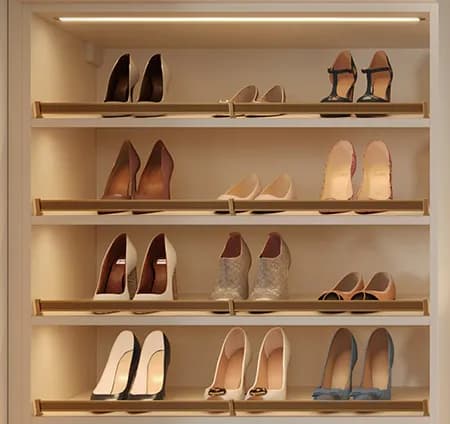
For deeper cabinets, slanted shelving with integrated heel catches is incredibly popular. Angling the shelves downward allows for denser storage, gives you a clear visual display of all your footwear options, and makes retrieving shoes significantly easier.
2. The Ventilation Imperative
One of the biggest concerns with enclosed shoe storage is odor and moisture buildup. If wet, worn shoes are sealed in a dark wooden box, mold and unpleasant smells will inevitably develop.
Custom carpentry solves this through stealthy ventilation. Carpenters can design stunning louvered (slatted) doors that allow constant airflow while hiding the contents. Alternatively, if you prefer a sleek, solid-door look, they can build hidden ventilation gaps into the shadow lines at the top and bottom of the cabinet, or install decorative, perforated metal mesh panels into the woodwork.
3. Space-Saving Tilt-Out Designs for Narrow Hallways
Many urban apartments and older homes feature incredibly narrow hallways where a standard 15-inch deep cabinet would block the walking path. For these tight spaces, carpenters design "tilt-out" shoe cabinets.
These brilliant, slimline cabinets can be as shallow as 6 or 8 inches. Instead of shelves, they feature pivoting drawers that drop forward, storing the shoes vertically. This allows you to hide dozens of pairs of shoes flush against the wall without sacrificing an inch of your precious walkway.
Expanding to the Full Mudroom Experience
If space allows, a shoe cabinet can be expanded into a comprehensive "mudroom" built-in. This all-in-one storage command center fundamentally changes how your family enters and exits the home.
Integrated Seating Benches
Putting on and taking off shoes while hopping on one foot is a hassle for adults and a safety hazard for children and the elderly. A custom entryway build often incorporates a heavy-duty, reinforced sitting bench. Beneath the bench, deep drawers or open cubbies provide rapid-access storage for daily-wear shoes.
Vertical Storage and Drop Zones
Above the bench, carpenters install durable beadboard or shiplap backing, equipped with heavy-duty metal hooks for winter coats, wet rain jackets, and heavy backpacks. Upper enclosed cubbies provide out-of-season storage for winter hats, gloves, and scarves.
Equally important is the "drop zone." This is a dedicated, counter-height shelf or drawer specifically designed for the items you empty from your pockets: keys, wallets, sunglasses, and mail. By providing a beautiful, dedicated space for these items, you prevent them from migrating to the kitchen island or the dining room table.
Aesthetic Integration
Because the entryway sets the design precedent for the home, your custom storage should not look like utilitarian garage shelving. A bespoke cabinet is built to seamlessly match your interior architecture.
Whether you desire a minimalist, handle-less cabinet finished in a stark matte black, or a classic shaker-style unit painted in a welcoming sage green with brass hardware, custom carpentry ensures the piece elevates your decor. Carpenters will carefully scribe the cabinet to fit over your existing baseboards and seamlessly integrate it with your crown molding, making it look like a permanent, high-end architectural feature.
Transforming your entryway from a chaotic dumping ground into a serene, highly organized foyer is one of the most impactful upgrades you can make to your daily routine. Invest in a custom shoe cabinet and take control of your home's first impression.